
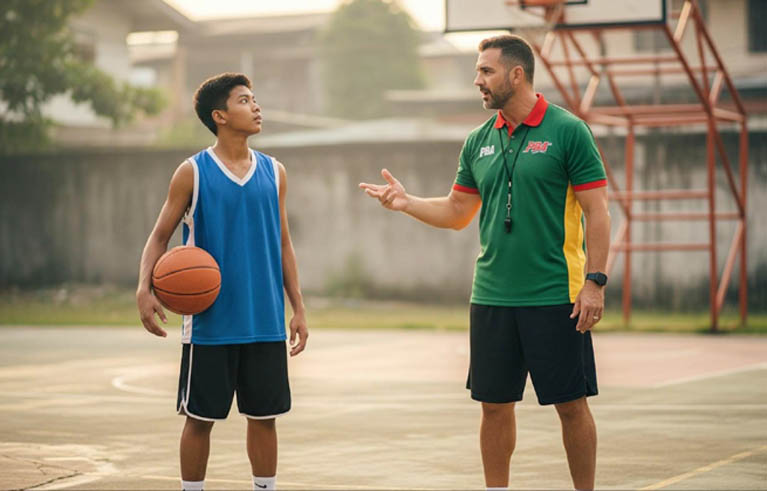
Valenzuela Olympics 2026 and the New Youth Sports Pipeline
The Valenzuela Olympics 2026 became more than a local opening ceremony when the Converge FiberXers backed the event and appeared with young athletes from 33 barangays. That detail explains the wider value: barangay-level participation gives a city a larger scouting surface than a single school league or invitational tournament. Youth sports Philippines still depend on access, transportation, uniforms, safe courts, and coaches who can teach footwork before they chase wins. A PBA team lending its name and personnel to a city competition does not create professionals overnight. It can, however, give a 12-year-old in a crowded gym a reason to take training seriously.
Barangay Competition Builds the First Filter
Local multi-sport events matter because they give young athletes a chance to be noticed without jumping straight into a major competition. A player from Karuhatan, Malinta, or Gen. T. de Leon can show what he can do close to home, whether that means defending well, running the floor, or staying composed in a tight game with family, friends, and classmates watching. The Valenzuela Olympics 2026 provides coaches with an early look at talent across basketball, volleyball, athletics, and other sports in the city. In youth basketball, the standout prospect is not always the leading scorer. Sometimes it is the 6-foot-1 forward who consistently boxes out, hustles back on defense, and talks through rotations. Those are the kinds of habits and instincts that local tournaments often reveal.
Projection Belongs Beside Patience
Talent projection in Philippine basketball development can get noisy because families, school coaches, agents, and social media clips often move faster than physical maturity. A fan reading youth results alongside senior PBA numbers may also check betting Philippines during pro games, where form, injuries, pace, and rotation patterns can shape expectations for Converge, Barangay Ginebra, TNT, or San Miguel. The responsible line is clear: youth events are for development, while betting markets belong to adult professional competition with published odds and bankroll limits. Keeping those categories separate protects the integrity of the school and barangay sports. It also lets young athletes grow without every missed free throw becoming content.
Converge Has a Development-Oriented Shape
PBA teams Philippines often describe community work in broad terms, but Converge has a roster profile that makes development language easier to understand. The PBA’s current team page lists players such as Calvin Abueva, Justin Arana, Justine Baltazar, Juan Gómez de Liaño, Alec Stockton, and MJ Garcia, with Danny Ildefonso also visible around the franchise structure and public appearances. That gives young players different templates: Abueva’s contact balance, Arana’s interior timing, Baltazar’s length, Gómez de Liaño’s open-court instincts, and Stockton’s guard pressure. A clinic becomes more useful when it links those names to mechanisms: closeout angles, passing windows, rim protection, and shot selection before the defense is set. The brand value is secondary to the basketball lesson.
Boxing Shows Why Local Pathways Matter
The Philippines already understands that elite athletes can come from compact gyms, crowded neighborhoods, and local tournaments that nobody outside the area notices at first. Boxing built that lesson over decades, from Manny Pacquiao’s rise out of General Santos to Nonito Donaire’s world-title years and younger fighters chasing regional belts. An adult fan looking at boxing betting will usually study reach, stance, punch volume, and whether a fighter fades after round 8 rather than relying on nationality or reputation. That same scouting discipline belongs in youth sports analysis: watch footwork, recovery, balance, and decision-making under fatigue. A barangay-level athlete with ordinary stats but repeatable mechanics can grow faster than a scorer who dominates only because of early size.
Digital Coverage Gives Grassroots Sports a Longer Life
Sports grassroots programs Philippines now last longer than one afternoon because phone footage keeps circulating after the medals are handed out. Parents post clips, city pages publish opening-ceremony reels, and local media can turn a 33-barangay event into a city story rather than a bulletin-board result. The same second-screen habits that move adults toward live casino Philippines also shape how they consume sports, because live dealer tables, livestreams, score updates, and short clips all depend on real-time attention and clear interfaces. The difference is the purpose of the session: casino formats involve game rules, table limits, house edge, and controlled bankrolls, while grassroots sports coverage builds recognition for athletes, coaches, and schools. Visibility can lead to donated shoes, a better practice slot, or a sponsor covering transport to the next city meet. That is not glamour. It is logistics.
The Stronger Pipeline Starts Below the PBA
If Converge’s involvement with the Valenzuela Olympics works, the best results will be mundane but crucial: more game footage, better coaching notes, safer playing courts, and a city database to track athletes from elementary through high school. Professional franchises can step up by lending coaches, running clinics, supporting equipment drives, and giving local tournaments a reason to properly document results. Meanwhile, families still shoulder most of the unpaid labor, namely on packing meals and paying tricycle fares, while schools remain the gatekeepers, deciding if practice can even happen during exam season. The event’s true value won’t appear until 2027 or 2028, when a single athlete from a barangay bracket makes it into a stronger school program and already has basic defensive skills. That is the true beginning of a development pipeline.